R286 - 2023-02-16
Bouncerate andRelativerate in Funnel- Ability to save and re-use
Named Filters - Open
Show in Formulain a new tab
Bounce rate and Relative rate in Funnel
By default Funnel will show the Conversion rates between Funnel steps as % of the first step of the Funnel. We are now introducing two more options:
BounceRelative
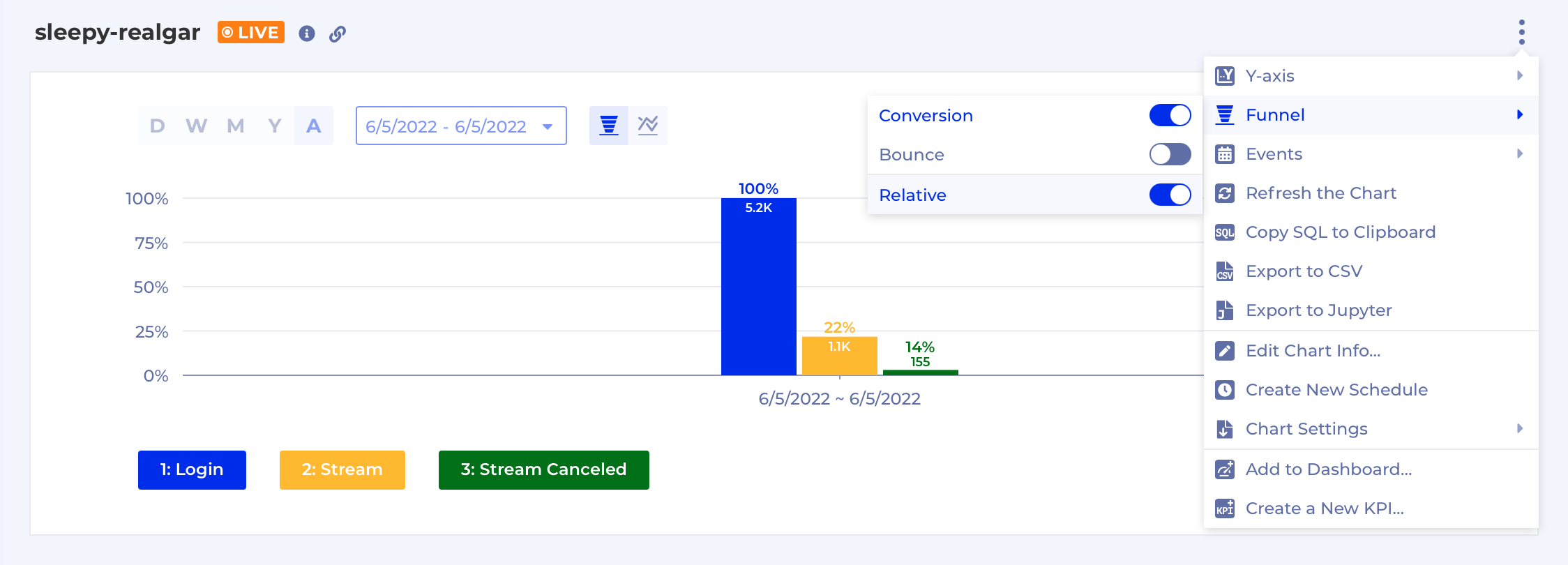
Toggles for all three options are available in the context menu above the chart after the Funnel analysis has been executed:
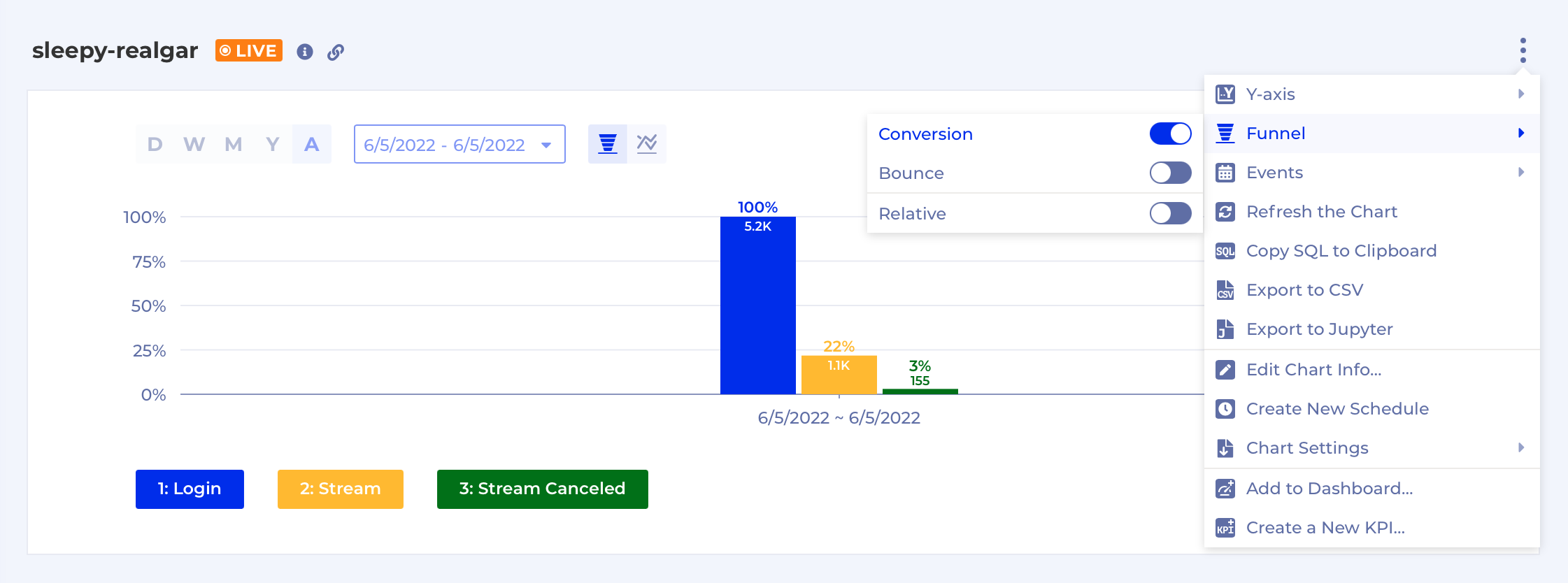
NoteThese options are not available when the Funnel is displayed as a Line chart.
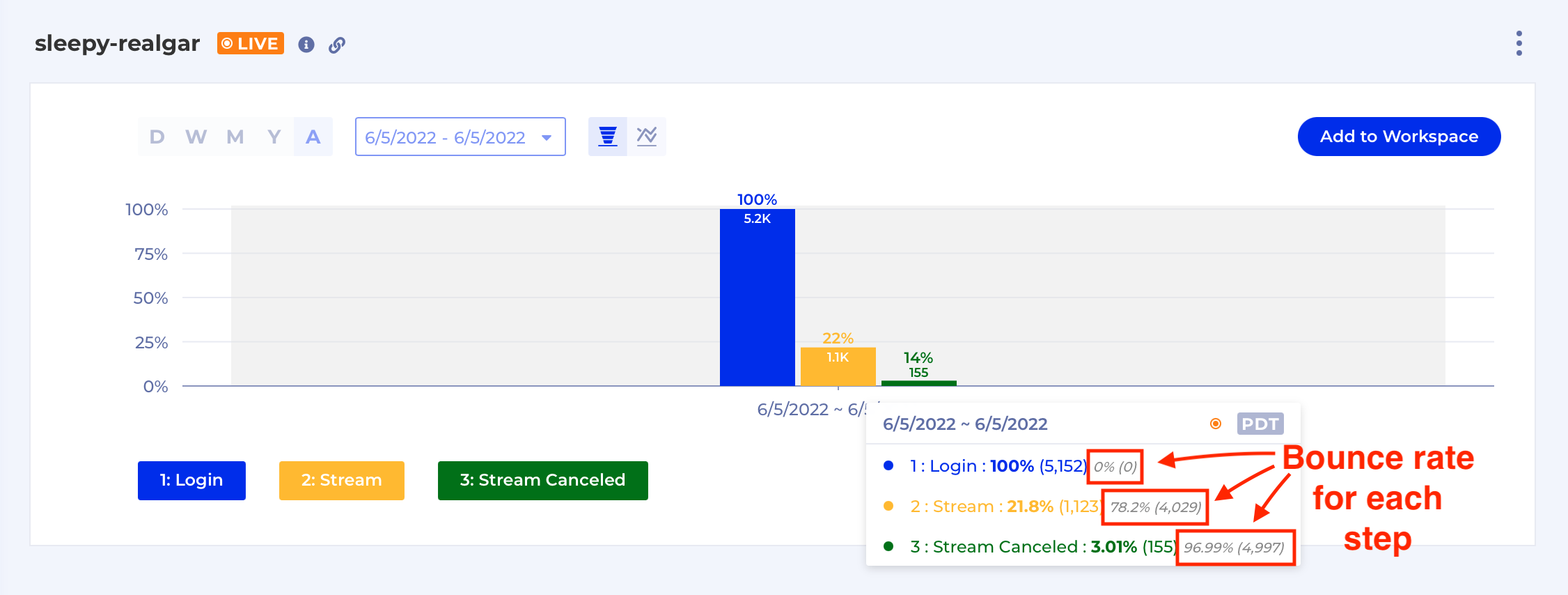
Bounce rate
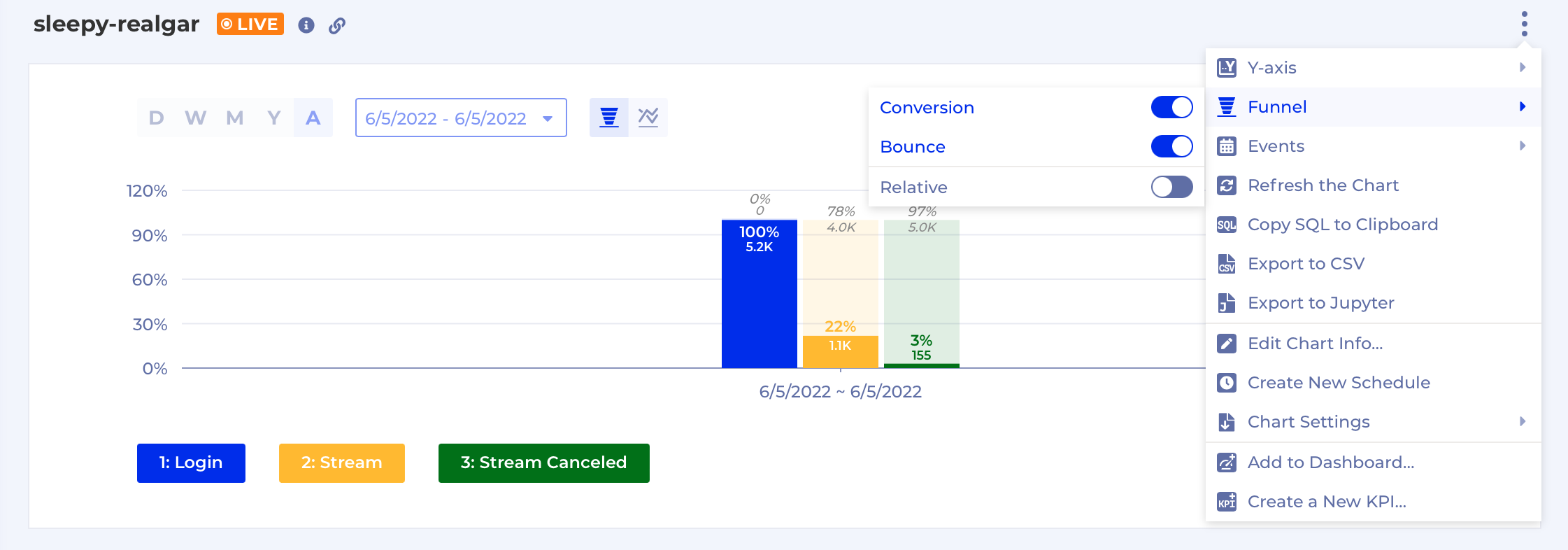
When Bounce is enabled you will see:
- Bounce rate % on top of each bar in the chart
- Total bounced users below the top of each bar in the chart
Bounce rate is also shown on hover for each step of the Funnel, for both Funnel and Line charts:
Relative rate
When Relative is enabled, you will see the conversion for each step is computed as % from the previous step. In the example below:
- Step 1 has 100% conversion
- Step 22% of the users on step 1 converted to step 2
- 14% of the users on step 2 converted to step 3
If Relative wasn't enabled, step 3 would display a conversion rate of 3% (155/5.2k)
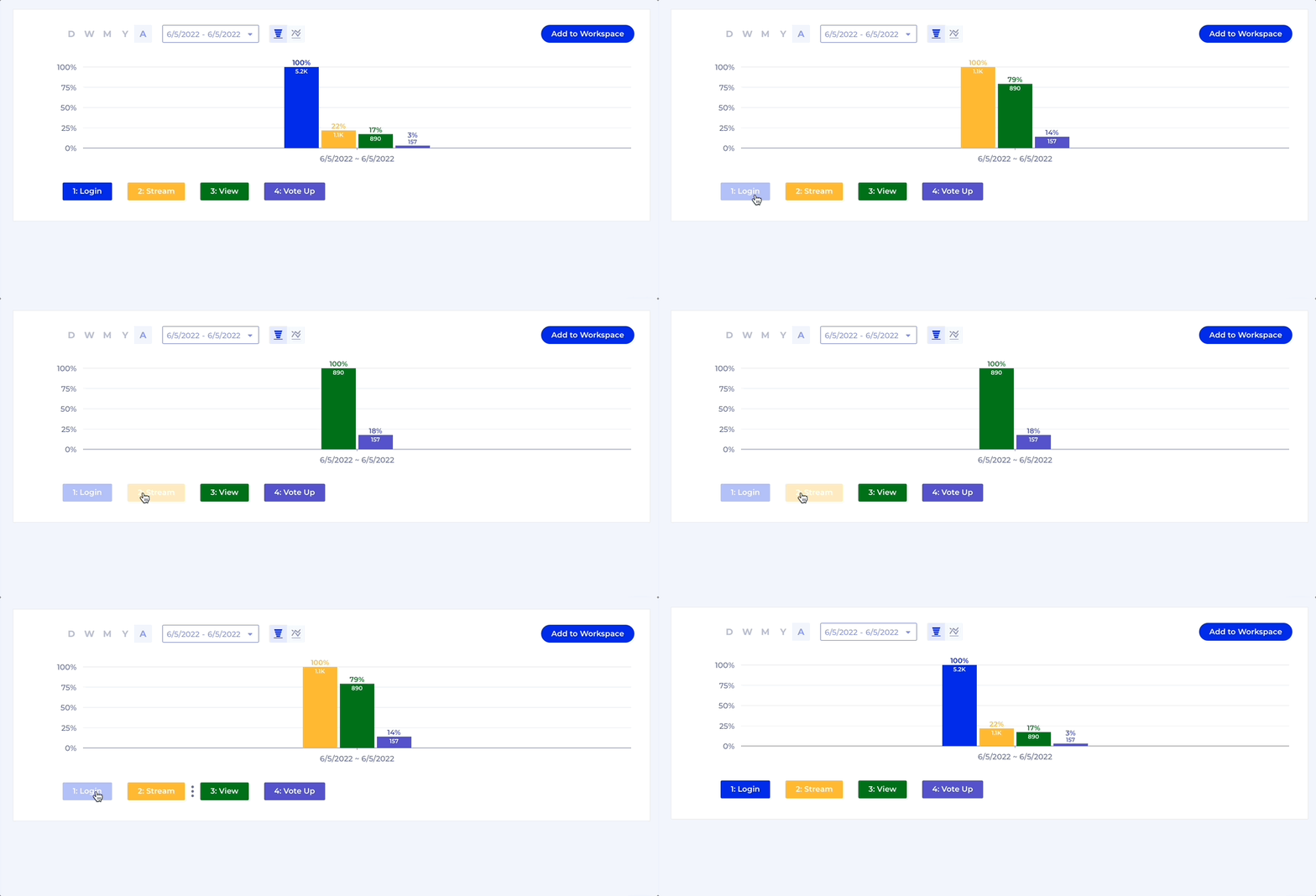
Also, whenever you deselect the left-most active step in the Funnel from the Step Selector, the conversion rates are automatically updated so that the first shown step is always 100% and the conversion rates for all the remaining steps are re-calculated from that. Here's an example:
Ability to save and re-use Named Filters
Named FiltersSometimes Filters can get really specific and non-obvious, so we developed this feature primarily to allow users who are more expert in the data to prepare filters and share them with others. It is also handy when you have plenty of Filter conditions you want to share between different types of analysis, e.g. Query, Funnel and Retention.
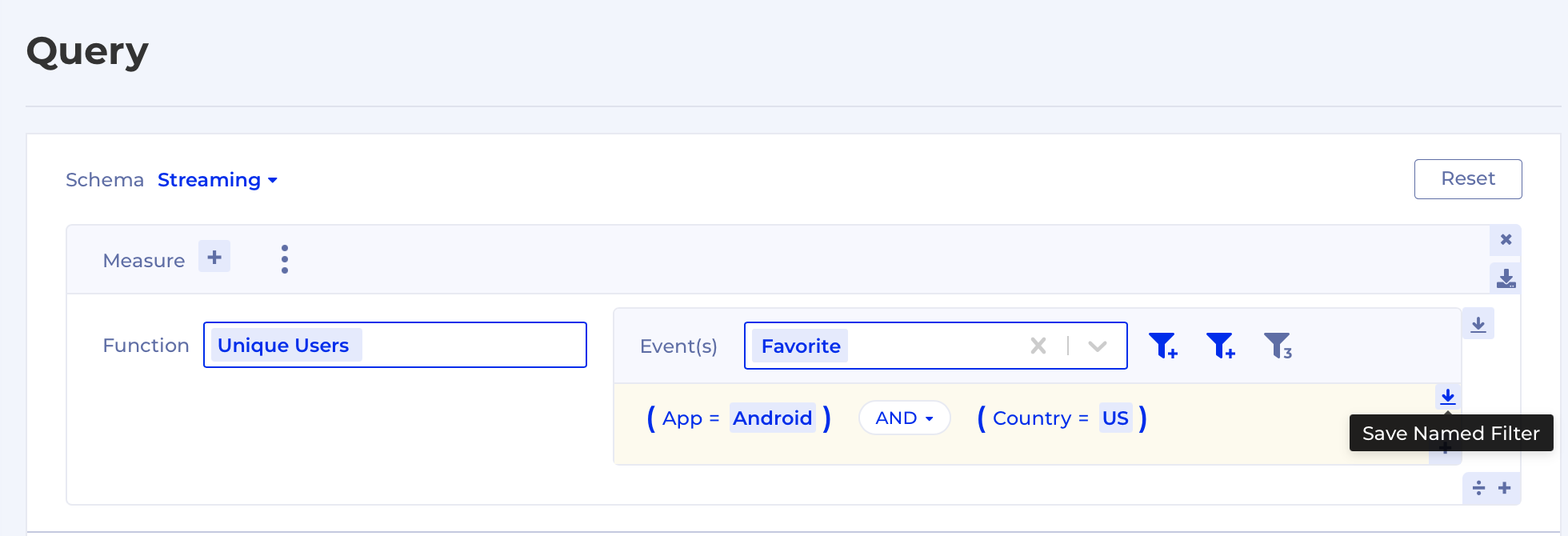
Save a Named Filter
Named FilterNow you can save a Named Filter from any analysis, here's an example in Query:
Re-use a Named Filter
Named FilterNamed Filters appear above Fields in the dropdown, autocomplete matches both Named Filters and Fields:
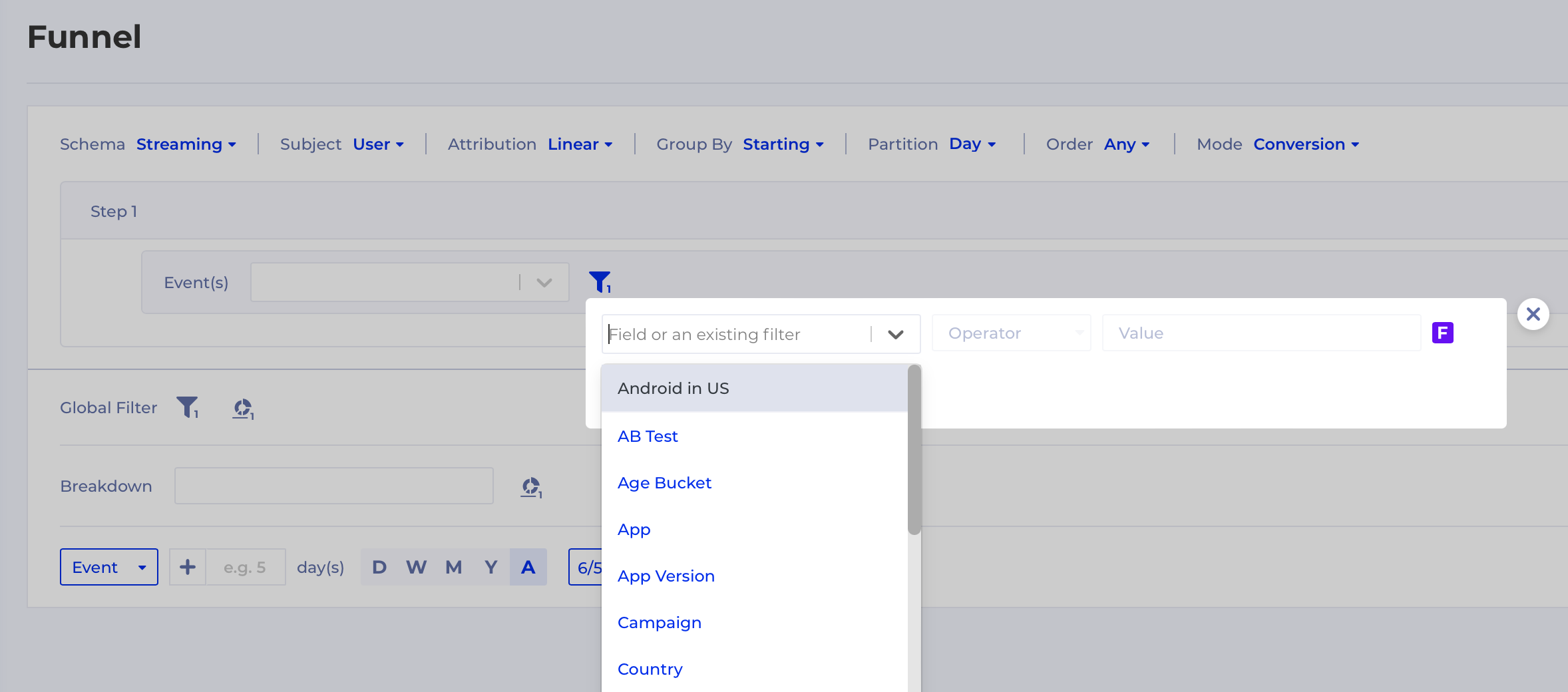
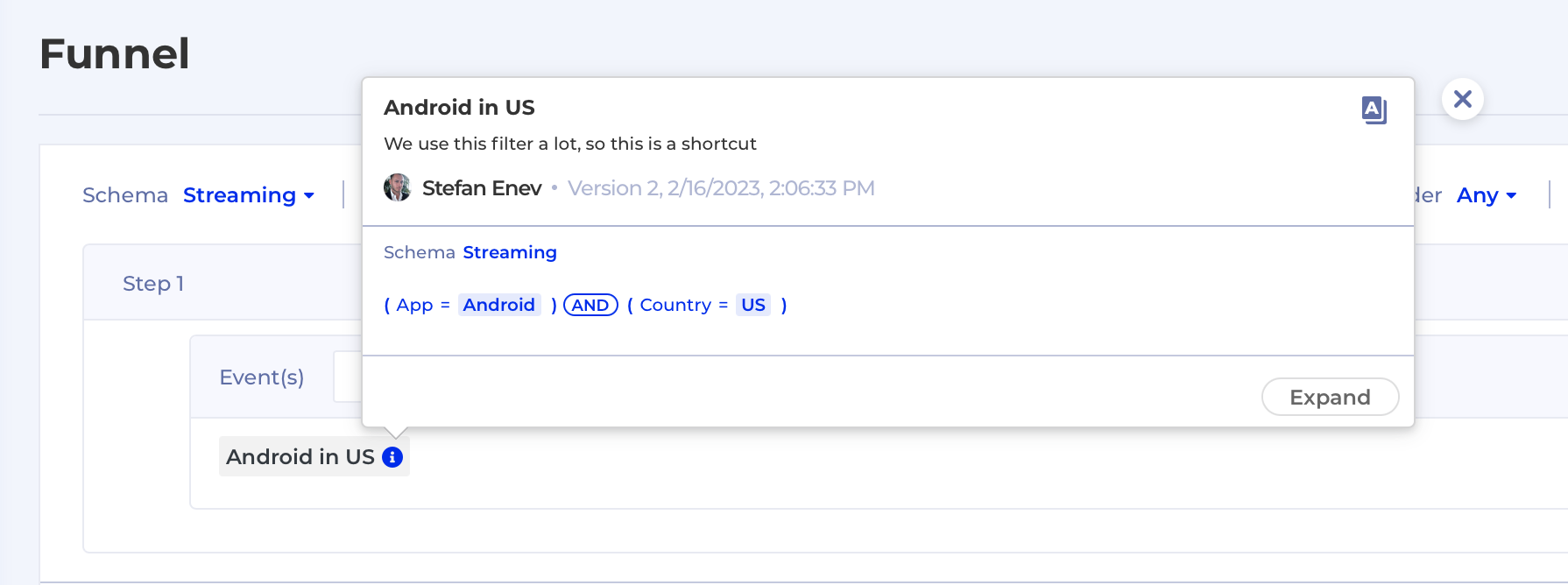
Named Filters are displayed like this and there's an i icon which you can click to see the Filter definition and the associated description:
Delete a Named Filter
Named Filter
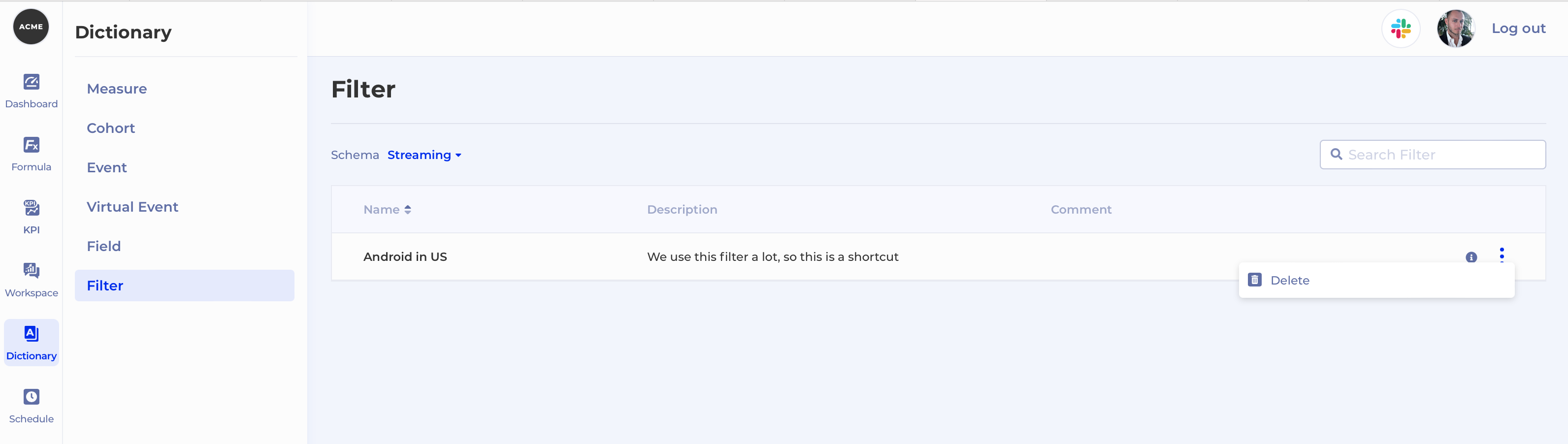
NoteTo delete a Named Filter you must go to the
Dictionarypage and then toFilteras shown below.
Open Show in Formula in a new tab
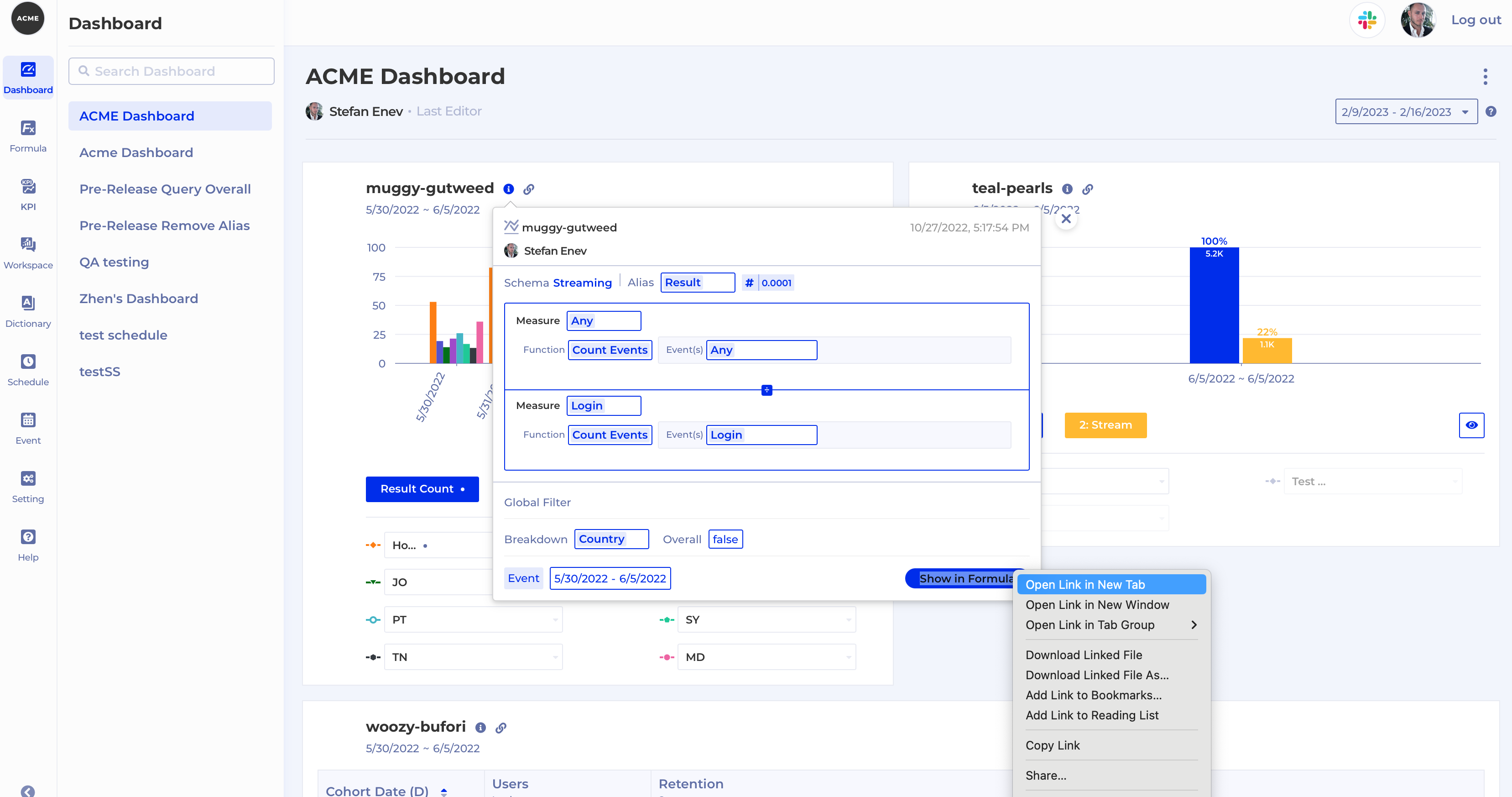
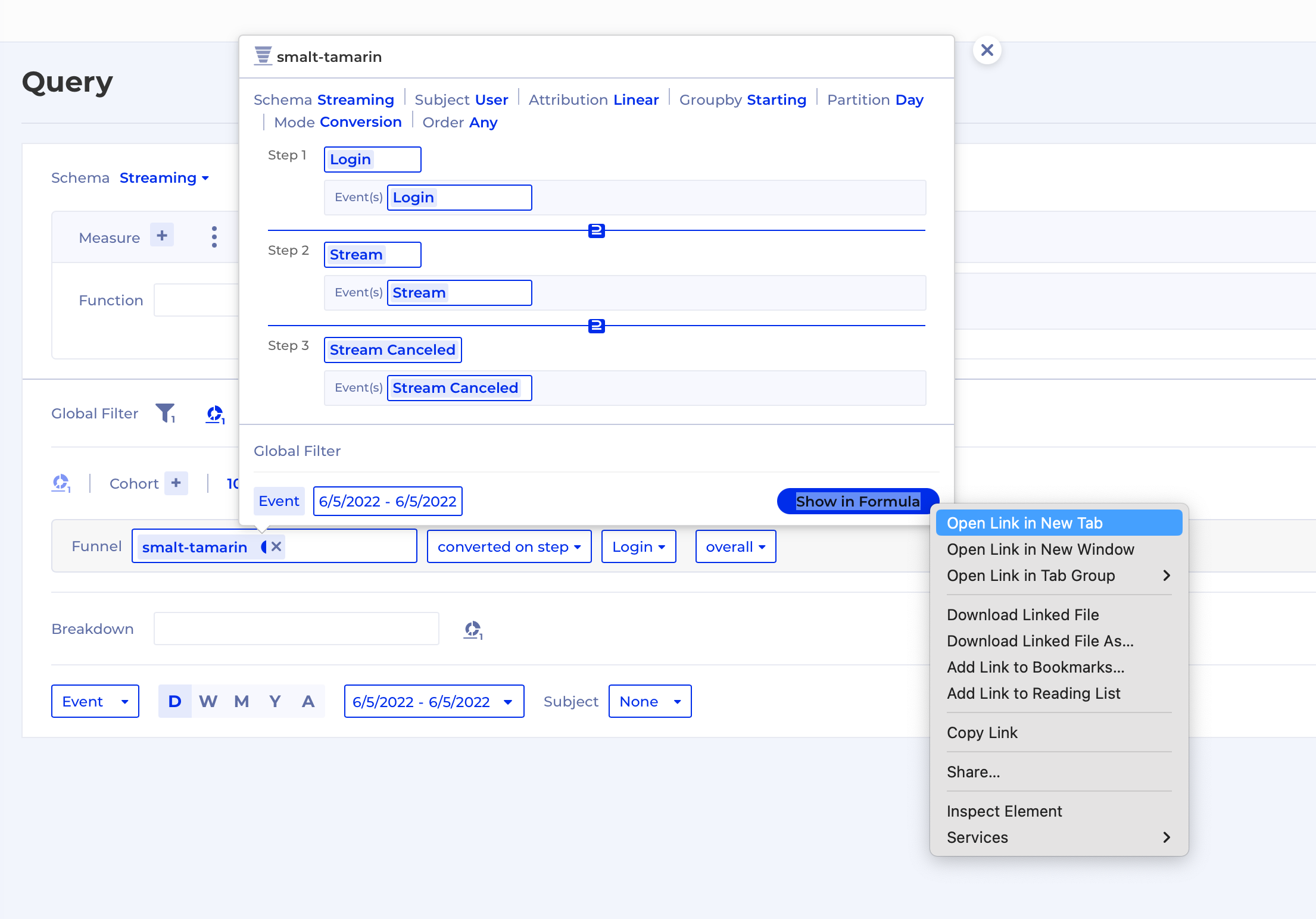
Show in Formula in a new tabYou can now right-click on the Show in Formula button to open any referenced analysis in a new tab. You can do that from Dashboard, Workspace, Cohort and even from inline Cohorts in any Formula. Just click on the i icon, then right-click on Show in Formula and then Open Link in New Tab.